October 06, 2026
Shelf Organizer Pakistan: Types, Materials, and What to Check Before Buying

Introduction
Choosing a shelf organizer in Pakistan is easier when you start with the space and the job it needs to do. A rack for a kitchen cabinet, a wall-mounted shelf for display, and a modular setup for a desk solve different storage problems. The right format depends on the available width, height, and depth, what you plan to store, and whether installation is required.
This guide compares common organizer types and materials, then explains how to measure for fit and check product details before ordering. Because listings can vary, treat a product’s stated dimensions, included parts, installation instructions, and seller policies as details to confirm, not assumptions to make from a photo. Use the checklist to compare options and choose a shelf organizer that suits your space and intended use.
1. Common Shelf Organizer Types
Product listings in Pakistan include formats such as wall-mounted shelves, kitchen and cabinet organizers, under-shelf hooks, and multi-piece organizer sets. These are examples of categories shoppers may encounter, not a complete list of what is available. Room shelving listings and kitchen cabinet organizer listings show how products may be grouped by location or use.
| Format | May suit | Check before buying |
|---|---|---|
| Freestanding or tiered organizer | A counter, desk, or other surface where you want storage arranged across levels | Overall footprint, height, and whether the levels suit the items you plan to place there |
| Stackable or modular organizer | Storage that may need to expand or be rearranged | Whether the pieces are designed to connect or stack together, and which components are included |
| Wall-mounted shelf | Using wall space for display or storage | Supplied hardware, installation instructions, and whether the mounting method is appropriate for your wall |
| Shelf insert or cabinet organizer | Dividing or arranging space inside an existing cabinet | Interior cabinet dimensions, usable clearance, and the product’s stated intended use |
| Under-shelf basket or hook organizer | Making use of space below a shelf for smaller items or utensils | Shelf thickness, clearance, attachment method, and what the listing says it can hold |
| Pegboard | Arranging compatible accessories on a board rather than storing items on a shelf surface | Accessory compatibility, board dimensions, and mounting details |
Freestanding and tiered designs can be considered when you have a suitable surface and want items arranged in levels. Modular products may offer a different layout, but don’t assume pieces from separate sets will fit together. Confirm compatibility in the listing or with the seller.
Wall-mounted products need particular attention to installation. Requirements depend on the product and wall, so check the supplied hardware and instructions rather than assuming a no-drill or universal mounting method. Pakistan listings include examples such as a wall corner storage shelf and an under-shelf hook organizer, but their seller descriptions apply to those products, not every organizer. For more context on mounted, floating, and stand formats, see this wall shelf organizer guide.
A pegboard is different from a shelf: it organizes items using compatible hooks or accessories instead of providing a shelf surface. Match the format to the items and space first, then verify fit and installation details.
2. Compare Materials Before Choosing
A material label can help you compare appearance and construction, but it does not establish how a particular organizer will perform. The available evidence does not support a universal durability, strength, or moisture-resistance ranking for wood, engineered wood, metal, and plastic. Check the specifications and care instructions for the individual product instead.
A wooden shelf organizer may suit a room or cabinet where a wood finish fits the existing furniture. A wood shelf organizer listing might refer to solid wood, engineered wood, or a product with only some components made from wood. Read the description for the stated material and construction rather than assuming the label means the same thing across listings. If care or environmental suitability matters, look for product-specific guidance.
Metal organizers vary too. Their appearance alone does not confirm load capacity, finish, or suitability for a wet room. Some seller descriptions may promote a product as rust-resistant or suitable for a particular location, but that should be treated as a product-specific claim, not a general property of all metal organizers. Confirm the exact wording and relevant specifications before buying.
Plastic options also differ by product. Check what material the seller identifies, how the organizer is assembled, and whether care instructions are provided. Do not infer a load limit or expected lifespan from the material name or product photo.
A useful comparison is therefore practical rather than absolute: note the listed material, finish, construction, care guidance, and any stated limitations. Then compare those details with where you plan to use the organizer and what you intend to store. If a specification is missing or unclear, ask the seller before ordering rather than relying on a general assumption about the material.
3. Measure the Space and Check the Organizer’s Dimensions
Measure the intended space before comparing product photos. Record the available width, height, and depth, then check whether doors, drawers, nearby items, or the way you use the space need extra clearance. For a wall-mounted organizer, also consider where it can be installed and whether the instructions and hardware suit that location.
Compare those measurements with the product’s stated dimensions. Check whether the listing gives the full unit size, the size of individual pieces, or the usable storage area. These figures may not describe the same thing. A product title or photo may show a set, while the written description lists components separately. For example, one multi-piece metal organizer set listing identifies included components. That is a product-specific example, so check the details for the item you are considering.
Hypothetical example: If a cabinet opening is 40 cm wide, compare that measurement with the organizer’s stated overall width and allow for any clearance needed to place or remove it. If a listing gives only component dimensions, ask the seller for the assembled size before ordering.
Use product photos to understand the general appearance, not as a substitute for measurements or written specifications. If dimensions are absent, ambiguous, or appear inconsistent, confirm them directly with the seller before paying.
4. Check Stability, Load Information, and Installation
A shelf organizer’s appearance does not tell you how much weight it can support or how securely it will sit once assembled. Look for a stated load limit, then check exactly what it applies to: the full unit, one shelf, or a particular component. If the listing gives no figure, ask the seller or consult the product instructions rather than estimating from the material or a photo.
For a wall-mounted organizer, check which hardware is included and whether the instructions specify the wall type or fixing method. Installation guidance for particular closet and wall systems discusses steps such as leveling the unit, marking stud locations, and using appropriate anchors when studs are unavailable. Those steps are not universal instructions for every product, so follow the guide supplied for the organizer you are buying. See the Organized Living installation guide for an example of product-specific guidance.
If the wall material or installation method is unclear, get qualified help rather than improvising. For a freestanding or stackable design, follow the manufacturer’s stability instructions and use the parts as directed. Confirm whether components are intended to stack or connect; a product photo alone does not establish that they are compatible.
Before buying, check whether the instructions explain assembly and whether parts must be secured together. For a freestanding unit, confirm the recommended placement and any stated limits on stacking. If these details are missing, request clarification before relying on the organizer for heavier or frequently handled items. Do not treat an unstated limit as permission to load it freely.
5. Match the Organizer to the Space and What You Need to Store
Start with the items you want to keep close and the space available for them. At a desk or study area, consider whether you have room for a shelf on the work surface, or whether a wall-mounted format would keep items within reach without taking up that surface. Check the product’s dimensions and installation needs against the spot you have in mind.
For a cabinet or shared household storage area, look for a format that fits the existing interior and lets you reach stored items comfortably. Think about how the organizer will be used day to day: a rack intended for utensils, for example, has a different stated purpose from a display shelf. Treat the seller’s description as guidance about intended use, not independent proof of performance.
In a creative or work area, modular accessories or adjustable components may help you arrange supplies around your routine. Before choosing them, confirm that they are designed to fit the specific organizer; similar-looking parts are not necessarily compatible. A pegboard is another vertical-organization option for a workspace, but it is distinct from a shelf and does not replace a shelf when items need a flat surface to rest on.
Shortlist formats that suit both the contents and the space, then compare their dimensions, included parts, and setup requirements before deciding.
6. Buying Checklist for Shelf Organizers in Pakistan
An online shelf-organizer listing can look clear in photos while leaving important details unstated.
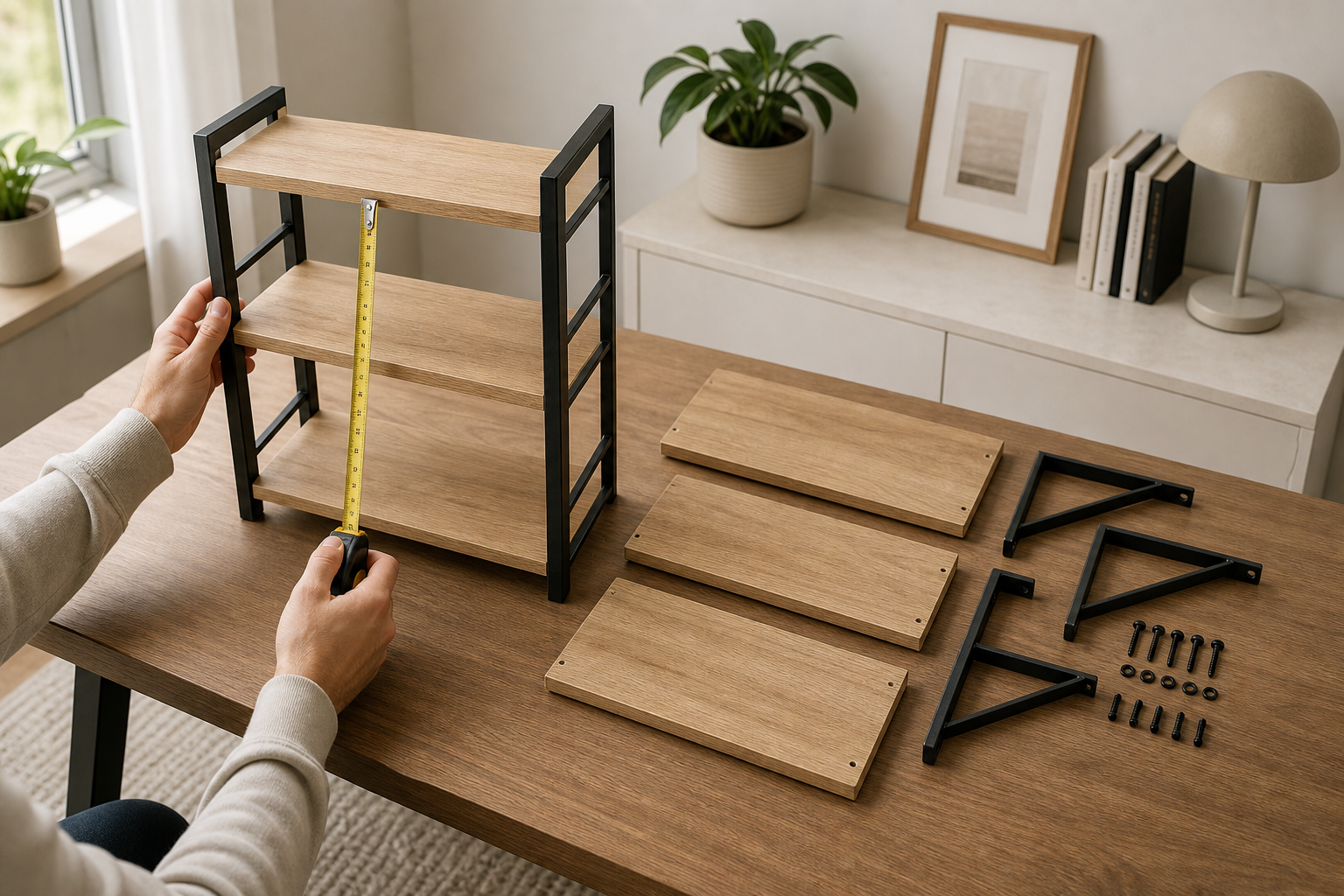
Before paying, check the current listing and ask the seller about anything that could affect fit, setup, or the final cost. Local product pages show varied formats and packages, so confirm what is included rather than relying on the product title or image alone.
Before you order, confirm:
- Exact dimensions and the listed material
- Included shelves, hooks, brackets, fasteners, or other parts
- Assembly or installation requirements and any stated load guidance
- Current total cost, delivery terms, payment options, and any disclosed charges
- The seller’s current return, exchange, and warranty terms
For a wall-mounted organizer, also check which hardware is supplied, whether it suits your wall, and what the product’s installation instructions require. If those details are unclear, ask before ordering rather than assuming the fittings will work for your space. At checkout, review the delivery destination, final amount, and available payment methods, since these details may depend on the particular listing or seller.
Policies are seller-specific. For example, one HomeDecoro product listing states a seven-day return window for damaged, defective, or incorrect items and sets conditions for returns. Check the current terms on the listing you are considering rather than assuming that example applies to another seller. A multi-piece product may also list its components separately, so verify the package contents before ordering.
If a decision-critical detail is missing, contact the seller and keep their response with your order information. Clear written specifications are more useful for comparing options than assumptions based on a product photo.
Conclusion
Choosing a shelf organizer is easier when you begin with its job: what it needs to hold, where it will go, and how you plan to access it. Measure the space, compare formats and material details, and check the product’s stated load and installation guidance instead of judging by appearance alone.
Before ordering, confirm the dimensions, included parts, total cost, delivery details, and the seller’s current policies. If a key specification is missing, ask before you pay. A short list based on fit and verified details can help you compare options more confidently. For desk organization, a modular pegboard may be a separate vertical-storage option, while a shelf provides a surface for items to rest on.