October 06, 2026
Wall Shelves Organizer Guide: Mounted, Floating, and Stand Options

Introduction
Choosing a wall shelves organizer starts with more than shelf size. Consider how much space you have, what you plan to store, the look you prefer, and whether you want to attach anything to the wall. A bracketed shelf makes its support structure visible; a floating shelf typically keeps much of its support hardware less prominent. A stand-style organizer, by contrast, is freestanding or leaning rather than wall-mounted.
These distinctions help narrow down a wall shelf organizer or wall organizer shelf for a room, desk, or workspace. The right fit depends on the specific product, including its dimensions, installation instructions, and stated load guidance. The sections below explain what to look for in each style, so you can compare appearance and installation needs without assuming one design works for every space.
How the Three Shelf Organizer Styles Differ
The main difference is how each organizer is supported. A bracketed wall shelf has visible brackets beneath or alongside the shelf. A floating shelf generally uses concealed or less-visible supports, such as internal brackets or a backplate, though designs vary by product. The bracket mounting instructions and floating-shelf installation guide illustrate these different support approaches.
“Stand” can be less precise. In this comparison, a stand-style shelf organizer means a freestanding or leaning unit, not a wall-mounted shelf. Check each product’s description and instructions because sellers may use the term differently.
A freestanding or leaning organizer is not a wall-mounted shelf. Confirm how the specific product is designed before comparing installation or storage details.
Style alone does not establish capacity or installation requirements. Those depend on the product’s construction, hardware, dimensions, and, for wall-mounted designs, the wall and fixing method. When comparing listings, separate support style from intended placement: mounted and floating designs attach to a wall, while a stand-style unit is freestanding or leaning. Check product dimensions and instructions to confirm fit and installation needs.
Mounted Shelf Organizers
A bracketed wall mounted shelf organizer can suit a shopper who wants visible support hardware as part of the room’s look or prefers to see how the shelf is supported. Brackets vary in form and placement, so review product images and dimensions to understand how much of the support structure will show and how the shelf will fit the available wall area.
Before buying, look for the exact product’s installation instructions. Check the required hardware, approved wall materials, bracket placement, and any stated load guidance. Do not assume hardware included with one system will work for another, or that a rating applies to a different wall or installation. For example, one bracket instruction sheet specifies mounting into solid wood or wood studs and limits bracket spacing for that particular product. It is an example, not a general rule for every bracketed shelf.
Installation and stability depend on the shelf, its hardware, the wall material, and how it is mounted. General guidance from Lowe’s on shelf installation also emphasizes following the product instructions and using the specified hardware. Compare the shelf’s stated capacity with what you intend to store, accounting for the shelf itself where applicable. If the instructions do not clearly cover your wall type or planned use, confirm compatibility before installing.
Floating Shelf Organizers
A floating shelf organizer is designed to make its supports less prominent than the brackets on a visibly mounted shelf. Depending on the model, support may be concealed inside the shelf or attached using another less-visible system. The effect is a simpler-looking shelf surface, but not every product hides all of its hardware, so check its photos and construction details rather than relying on the category name alone.
A minimal appearance does not mean simpler installation or greater capacity. Review the exact model’s instructions for mounting hardware, wall compatibility, placement, and any stated load guidance. Floating-shelf guidance commonly addresses mounting into studs where possible and using appropriate anchors when studs are unavailable, but the required method varies. This installation guide is one product example; follow the manufacturer’s instructions for the exact shelf you are considering, and do not substitute generic hardware without checking that it is approved.
Measure the wall and compare the shelf’s width, depth, and clearance with the intended location. Consider what you plan to store, then check whether the product’s load information applies to your wall material and fixing arrangement. If it does not specify a suitable installation for your wall, seek clarification before buying or mounting it. Careful measuring and instruction checks help you judge whether the floating style works for your space, beyond its appearance.
Stand-Style Shelf Organizers
A stand-style shelf organizer is a separate option from a wall-mounted shelf. Depending on its design, it rests on the floor or leans in place. The word “stand” can be used in different ways in product listings, so check the product description and installation instructions to confirm how a specific organizer is positioned.
This style may suit a room where you prefer not to mount a shelf to the wall, or where floor placement works better with your layout. In return, it uses some of the floor area, so measure the available footprint and compare it with the organizer’s stated dimensions before buying. Also check any manufacturer guidance about placement and stability, especially for a leaning design. Do not assume a product is freestanding or safe in a particular location based on its name alone.
Search phrases such as “wall shelf stand,” “wall stand shelf,” and “wall shelves stand” may describe different product types. Confirm whether the item actually attaches to a wall or stands on the floor; a freestanding organizer is not a wall-mounted shelf. Review the exact product’s instructions and capacity information rather than applying guidance from another style.
How to Choose the Right Wall Shelf Organizer
Start with the space and the items you want to store. Measure the wall area and, if considering a stand, the floor footprint. Think about how often you need to reach the stored items, whether you want visible supports, and whether you are comfortable installing hardware into the wall. These checks can help narrow down a wall shelf organizer or a freestanding alternative without assuming one style has more capacity than another.
| Organizer style | How it is positioned | What to verify | May suit |
|---|---|---|---|
| Mounted, bracketed shelf | Attached to the wall with visible support brackets | Wall compatibility, bracket and hardware instructions, dimensions, and product-specific load information | Shoppers who prefer visible supports and wall storage |
| Floating shelf | Typically supported by internal or less-visible hardware; designs vary | Wall material, required fixings, dimensions, and the exact installation and load guidance | Shoppers seeking a less prominent support structure |
| Stand-style organizer | Rests on the floor or leans, depending on the product | Footprint, dimensions, placement instructions, and stability guidance | Shoppers who prefer a floor-standing option |
Before choosing a wall mounted shelf organizer, review its material and finish, included hardware, and the instructions for your wall type. Floating shelf guidance may call for locating studs or using suitable anchors when studs are unavailable, but the exact product instructions control. Lowe’s floating-shelf guidance also emphasizes using hardware appropriate to the installation. For bracketed systems, follow the specific bracket instructions: one shelf-bracket instruction sheet gives requirements for its own product, not a universal rule.
Assess load information only from the documentation for the exact organizer and installation. A rating may depend on the wall material and fixings, so do not transfer it to a different product or setup. Include the shelf’s own weight when considering the total load, and check the manufacturer’s guidance before placing items.
For Desk and Studio Storage: Consider a Pegboard Too
For selected desk or studio items, a pegboard can be an adjacent wall-organization option.
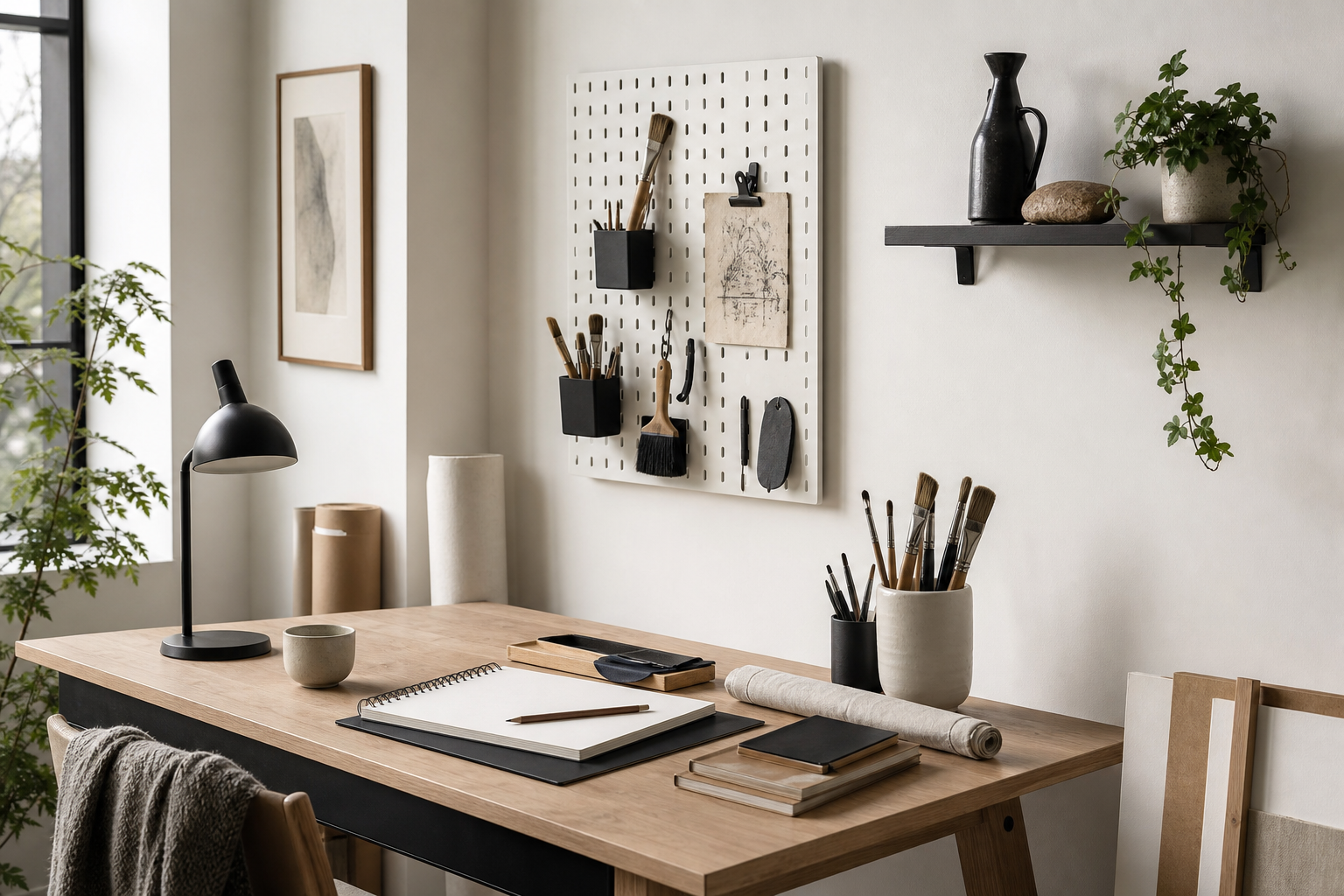
With compatible accessories, it can keep some belongings arranged on a wall, but it is not itself a shelf organizer and should not be treated as equivalent shelf space. Consider what you need to store and whether an accessory provides the specific kind of support or containment those items require. For a desk setup, list the items you want within reach, then check whether compatible accessories provide the arrangement they need. Compare board dimensions with the available wall area before deciding whether this format fits.
Before purchasing, check the current product specifications, accessory compatibility, dimensions, and mounting instructions. Do not assume a pegboard’s load capacity from its appearance or from information about another board or accessory.
Conclusion
The right organizer depends on the space available, your installation preferences, the items you plan to store, and the exact product’s instructions. Mounted and floating shelves use wall fixings; stand-style organizers rest on the floor or lean, while pegboards offer a separate way to arrange selected workspace items.
Before deciding, measure the intended area and review the product’s dimensions, hardware, placement guidance, and load information. Also check whether the organizer leaves enough clearance for nearby doors, furniture, and everyday movement, and whether its location suits the items you want to keep within reach. Let the manufacturer’s documentation for that specific setup guide your choice.